17. 06. 2026
Key takeaways:
Ever wondered what self-charging hybrid cars are and how they differ from plug-in hybrids? Or maybe you’re still deciding what suits you best: hybrid or electric. Choosing the right car can be a bit overwhelming. In this guide, we’ll bring you up to speed with the basics of self-charging hybrids, so you can make the move confidently and switch to a vehicle that fits your needs, lifestyle, budget and make you fall in love with driving again.
Self-charging hybrids combine traditional fuel and battery power for increased range, greater fuel efficiency and lower CO2 emissions. These cars come with both an internal combustion engine and a small battery-powered electric motor that does not require charging from an external source.
Not only these cars offer the best of both worlds, but they also take away the anxiety of having to find a charging station. They don’t need to be plugged in!
So how does the battery, the electric motor and the internal combustion engine work together to make a car that is easy to drive and gets you where you’re going more efficiently?
Simply put, every time you step on the brakes, the car slows down, losing the motion energy to its surroundings (for example, through heat due to friction as brakes are applied). But self-charging hybrids are able to recover some of that energy through regenerative braking and energy conversion.
This amazing process takes place in four stages:
What makes this technology great is that every time you slow down, you’re also charging your car’s battery. The battery powers the electric motor which works either alongside or instead of the internal combustion engine. For stop-start driving in towns, the hybrid car will rely only on the electric motor. But most often the two sources of energy work together. For example, the electric motor can lend more power to the traditional engine to help it accelerate, making it easier for your car to gain speed and save fuel.
There are a handful of hybrid types and the differences between them can be quite subtle. The two main hybrids, self-charging and plug-in, differ mainly in the way the size of the battery and how it gets charged.
Keep in mind: Another type of vehicle is the mild hybrid. This car is very similar to the self-charging hybrid, but it has a much smaller battery, and its only function is to help the diesel/petrol engine work more efficiently. It cannot power the car by itself.
The term ‘self-charging’ has the reputation of being somewhat of a misnomer. “The reason is that self-charging cars have a smaller battery than plug-in hybrids. So, even though they charge automatically, they don’t have to charge as big of a battery as plug-in hybrid cars. But given the differences between the two types of hybrids, we, here at Subaru, find the term useful in our conversations with drivers because it helps people separate in their mind the hybrid vehicles that need to be plugged in to charge from those that don’t.”
Based on research from the Society of Motor Manufacturers and Traders (SMMT), we know that 1 in 7 new cars sold in the UK in 2024 were self-charging hybrids (13.5%) which marks an increase in sales (22,460 more self-charging hybrids were sold this year so far compared to 2023).
So, what exactly drives this increase in interest? We know from our experience that there are a few straightaway advantages people want to get from a self-charging hybrid car.
No car is perfect for everyone, so self-charging hybrids come with a couple of features you need to take into consideration.
Self-charging hybrids rely on fuel when driving at high speeds, which means that the efficiencies brought by the electric mode kicking in don’t come in while driving on motorways.
The battery capacity of self-charging cars is smaller compared to the batteries in plug-in hybrids. So, if you want to rely on electric power for longer trips, it’s worth checking out electric cars as well.
Yes, the Subaru self-charging range includes two beloved, go-anywhere hybrids.
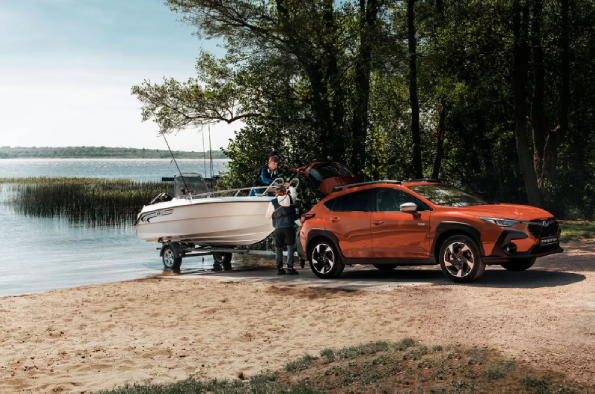
Subaru Crosstrek designed with a self-charging electric motor, all-wheel capability, X-MODE to keep you in full control and so many other features. This Subaru self-charging hybrid can handle any terrain, so if your journeys take you both on and off-the-road, the Subaru Crosstrek might be the one for you!
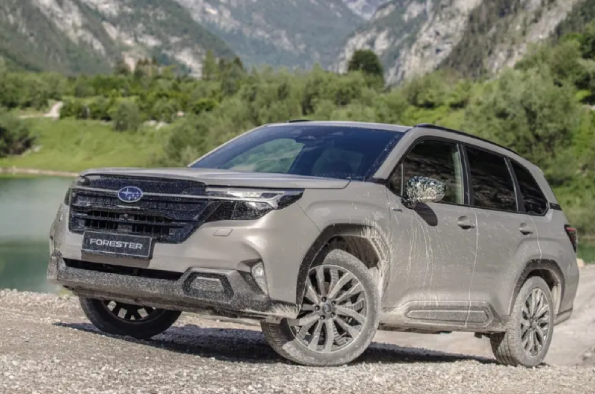
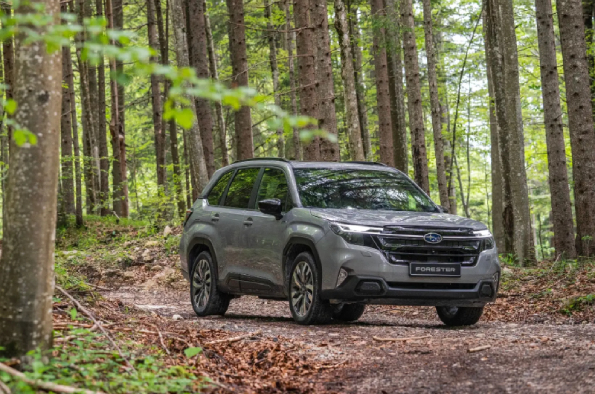
Subaru all-new Forester is our award-winning hybrid SUV. This car comes with an even more powerful engine, able to get you where you’re going even if it’s through mud and rocks. Check out our battle-tested all-new Forrester.
Now that you know what self-charging hybrids are and how they work, here are a few popular questions we get asked all the time.
No. Self-charging hybrid cars don’t rely on an external power source, so you don’t need to plug them in.
The battery in a self-charging hybrid is small and can usually cover one to two miles in fully electric mode.
Just as traditional cars, you can drive conventional hybrids in all weather conditions. Our Subaru models are equipped with driver aid technologies that give you extra control, including All-Wheel Driving to help your car keep its grip on the road. But just as with any other car you’re driving, be extra careful when necessary and avoid driving in extreme weather conditions.
The electric motor gives your internal combustion engine a helping hand. When you’re stuck in traffic and having to stop and start numerous times, the electric mode kicks in, saving you fuel. While driving at higher speed, the petrol/diesel engine and the electric motor work together for even more fuel economy, while also making your car feel faster. So self-charging hybrid cars can indeed help you save fuel.
No. On average, the maintenance costs are similar for both self-charging hybrid cars and traditional cars. It might even be possible to notice cheaper maintenance costs since there is less wear on the engine and brakes. Keep up the regular servicing and don’t forget to change the oil (easily done for hybrid car drivers!).
Our motability scheme is designed to give you the independence you need in a reliable car you can trust. The scheme is available for our Crosstrek and Outback models. Find out more about the Subaru motability scheme here.
Hybrids are quieter and offer a smoother driving experience. You might also notice a change when you apply your brakes due to the regenerative braking system kicking in, but it will be very subtle. You can request a test drive for our Subaru Crosstrek or the all-new Forrester Forrester e-Boxer hybrids and see the difference yourself.
Want to delve deeper into the benefits of hybrid cars? Check out our handy guide next.


 4.8
4.8